


Ex-Iraqi Parliamentarian: Mr. Trump, Don’t Make a Deal with the Devil in Iran
by Heather Robinson

From The National Review
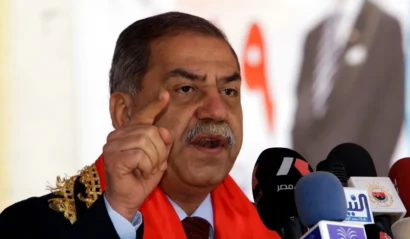
Mithal al-Alusi speaks at a campaign rally ahead of elections, in Baghdad, Iraq, March 7, 2010.(Saad Shalash/Reuters)
Mithal al-Alusi has a message for President Donald Trump: Don’t make a deal with the devil.
“Negotiating with the Islamic Republic of Iran at this time would be like trying to make peace with Hitler the last few days of his life,” said Alusi in a telephone interview this week from Erbil, Kurdistan. “I say: Please, President Trump, do not let them deceive you and turn you into another Obama.”
Twice elected to Iraq’s parliament, Alusi, a champion of human rights, including the rights of women, in the Middle East, has dodged multiple assassination attempts — some by Iran’s regime, he believes. In September 2004, while serving in Iraq’s interim government as director general at the Supreme National De-Baathification Commission, the maverick in Iraqi politics made the fateful decision to travel to Israel to promote normalized relations between Iraq and the Jewish State, including counterterrorism cooperation.
Before he returned to Baghdad, he began receiving death threats, and shortly afterward, terrorists thought to be linked to Tehran murdered his two sons, Ayman, 29, and Jamal, 22, as payback for their father’s decision to visit Israel. Refusing to be intimidated, Alusi stayed in Baghdad and ran for parliament, winning election in December 2005 despite propaganda campaigns by Islamist parties branding him a “Zionist agent.”
Alusi used his position in Iraq’s parliament to promote human rights and counterterrorism cooperation among democracies including the U.S., Iraq, and Israel — and to warn of the malign influence of Tehran in Iraq’s politics.
As early as 2006, Alusi, a Sunni Muslim, told one journalist that Iran’s regime was supporting both sides (Shia and Sunni) of the Iraqi insurgency — a claim for which evidence eventually emerged. He also stated repeatedly that many Iraqi politicians have been bribed by the Iranian regime, and that Tehran tried unsuccessfully to bribe him “to be anti-America.”
Alusi, who received the American Jewish Committee’s Jan Karski Award for confronting antisemitism in 2019, has said that he is “still alive because [he] live[s] among the Kurds in Erbil.” He stresses that the U.S., Israel, and their allies must commit to continued pressure on Iran’s regime to give the Iranian army and the Iranian people the confidence to rise up. He strongly advises President Trump, who Alusi says made the decision to attack the regime “with little support — but he did the right thing,” to keep up the pressure on Tehran.
Moreover, Alusi asserted that the 15-point plan and cease-fire proposal the U.S. sent Iran this week has “no value” because even if Iran agrees to the proposal, unless the regime is “willing to become normal” it will “continue to circumvent laws and commitments.”
The 15-point plan President Trump presented to the regime on Tuesday stipulated that, in exchange for the U.S. ending the war and dropping sanctions against Iran, the regime would agree to dismantle its nuclear weapons program and permanently commit to ending its nuclear ambitions. The plan also required Iran to submit to strict monitoring by the International Atomic Energy Agency (IAEA); keep the Strait of Hormuz open; and cease funding, arming, and directing terror proxies, including Hezbollah, Hamas, and the Houthis in Yemen. As of Thursday, the plan, presented amid threats of resumed U.S. military strikes against the regime and its power plants, had been rejected by the regime, with Iranian state media quoting an unnamed official who demanded in response a halt to U.S. “aggression and assassinations,” and recognition of Iran’s sovereignty over the Strait of Hormuz.
He believes a better litmus test than signing agreements would be Iran’s acceptance of Israel.
“If Iran is willing not to develop nuclear weapons and is ready to curb its expansionist ambitions in the Middle East, does that mean it is also willing to accept Israel?” said Alusi. “Or is it still determined to uphold what it considers its divine mission to destroy Israel?”
Based on his experiences with the leaders of the current regime, they do not want peace regardless of what they might say publicly, Alusi said; rather, they are complete fanatics who will play Trump for time if they can. However, “they now understand that President Trump doesn’t compromise on the values he believes in, and he will not allow them to acquire a nuclear bomb,” Alusi wrote to National Review this week via WhatsApp.
“Their current objective . . . is to preserve [what remains of] the Iranian regime. Future U.S. elections [will] bring a new president after Trump, giving them an opportunity to rebuild what they have lost. As Iran’s foreign minister has said, as long as they possess the will and scientific knowledge, they can restore their capabilities,” he said.
Short of their complete surrender and agreement to accept Israel, Alusi would advise President Trump to avoid any agreement with the present regime and advises, “They want to embarrass and humiliate President Trump personally.”
To keep up the pressure, Alusi believes the U.S. should do whatever is necessary not just militarily, but also via financial mechanisms to stop Iraqi dollars from going to Iran’s regime — something he said has been happening for many years. “I think the change has started,” he said this week. “The regime will come crumbling down if we stop Iraqi dollars from going to Iran’s regime.”
Since as early as 2010, Alusi has spoken of Iraqis being bribed and used by Iran. The Islamic regime’s sinister influence has taken many forms, according to Alusi, ranging from alleged bribery of Iraqi politicians, including former Iraqi Prime Minister Nouri al-Maliki and Alusi’s former colleagues in Iraq’s parliament; corrupting elections; and using Iraq as a way station to transport weapons to Iran’s terrorist proxies from Afghanistan to Gaza (Alusi flagged this activity in 2021; Iranian and American weapons, thought to be from caches abandoned by the U.S. in Afghanistan, appear to have been used in the Hamas terror attacks of October 7, 2023, and it’s now acknowledged that Iran’s regime sent $150 million to Hamas before October 7th to help fund Hamas’s atrocities against Israelis). Recently, the U.S. Treasury Department sanctioned Iraqi individuals and companies for laundering money and supporting militias that support Iran.
And the Trump administration recently announced new sanctions taking aim at Iraqis — including members of Iraq’s parliament — for supporting and leading armed militias that support Iran and its terror proxies.
This entry was written by Heather Robinson and posted on March 27, 2026 at 6:53 pm and filed under Features. permalink. Follow any comments here with the RSS feed for this post. Keywords: . Post a comment or leave a trackback: Trackback URL. */?>