


Iraqi Liberal Warns of a Fixed Election

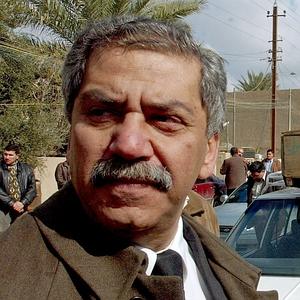
In a phone interview from Baghdad yester day, an Iraqi member of parliament said he believes he and other liberals are being shortchanged votes by an Iraqi Electoral Commission that has been corrupted by Iran.
“The citizens of Iraq went to vote in the election; they have done their job,” said Mithal al-Alusi of the Iraqi Nation Party. “But bad games have been played in the election.”
Alusi’s secular party champions human (including women’s) rights as well as free markets, a free press and alliance among democracies. He first won election in December 2005 after his two sons were murdered by terrorists.
The killings were seen as “payback” for Alusi’s decision to visit Israel — but Alusi, a Sunni Muslim, refused to be intimidated. He stayed in Iraq, got his then-little-known party onto the ballot, won his seat — and continued to visit Israel.
Now he warns of massive tampering in the tallying of the March 7 votes.
For evidence, he points to discrepancies between the Iraqi Electoral Commission’s report of the vote count and the results cited by independent election monitors.
Release of the final results has already been delayed, with an announcement now expected today. But initial numbers for select districts are out — and the Electoral Commission’s vote counts for Alusi’s party and other liberals don’t match the independent monitors’ numbers, he says.
“I’ll give you one example,” he told me. “We have a lady [running as part of our list], Jamila Feily. We collect paper from the monitoring people. We know how many did vote for us. [Jamila Feily] did receive 5,000-something votes. [But] the election commission declared she received 57 votes.
“This lady, she has 600 people working [as volunteers] for her, friends and supporters. How then she could get 57 votes?”
The overall pattern, he claims, is a massive “vanishing” of votes: “They just take the zeros out.”
He says these discrepancies show up not only in votes for his party, but also for other progressives, such as the Shiite liberal Iyad Jamal Al-Din — who also campaigned against Iranian meddling in Iraq.
How could such fraud occur under the supervision of independent monitors? Many, if not most, of the monitors “can’t read Arabic,” Alusi explained.
His strongest evidence may be that the emerging “official” vote count for his party is far below what he drew a year ago, when he was virtually a national pariah.
The Iraqi Electoral Commission says Alusi’s party got 10,000 votes in Baghdad this time around. But in January 2009’s provincial elections, he got 60,000 votes in the city. And back then, he was facing prosecution for treason because he had visited Israel. (Iraq’s Federal Supreme Court has since struck down the charges, ruling that it was no longer a crime for Iraqis to travel, including to Israel.)
“[At that time] they were preaching in the mosque, ‘Mithal is Mossad’ and we received 60,000 votes in Baghdad.”
Alusi also fears the Obama administration will remain passive in the face of possibly rampant fraud, even if Iran and its pawns are the likely culprits. The White House might see maintaining a facade of stability in Iraq as important enough to let Iran to hijack the Iraqi election.
“I hope I am wrong,” he said. If not, then “the American government is making a huge mistake. They will be pushing Iraq, and Israel, into a death corner.
“You can sell this [to the American people and the world] for one week, one month, six months, but the fascists in Iran will be getting stronger all the time.
“Then what?”
This entry was written by Heather Robinson and posted on March 18, 2010 at 2:22 pm and filed under Commentary. permalink. Follow any comments here with the RSS feed for this post. Keywords: human-rights, Iraq, Israel. Post a comment or leave a trackback: Trackback URL. */?>